


Clarence D’Cursor
macOS, 2026
A small Mac app starring a gnome named Clarence, who keeps watch over every Cursor agent I have running and lets me know when one of them needs my attention. Everything he sees stays on my Mac.
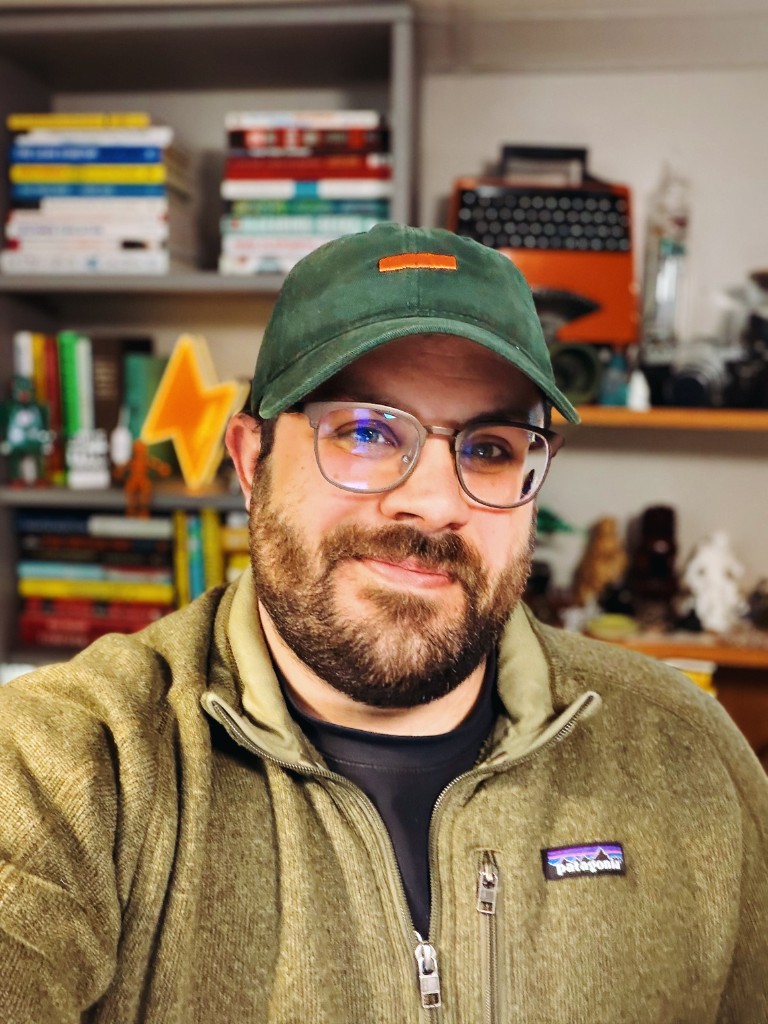
I’m Eric Mistry, a maker and education expert. I build with AI every day at Zapier, and I help customer education and customer success teams work out what it’s actually good for.
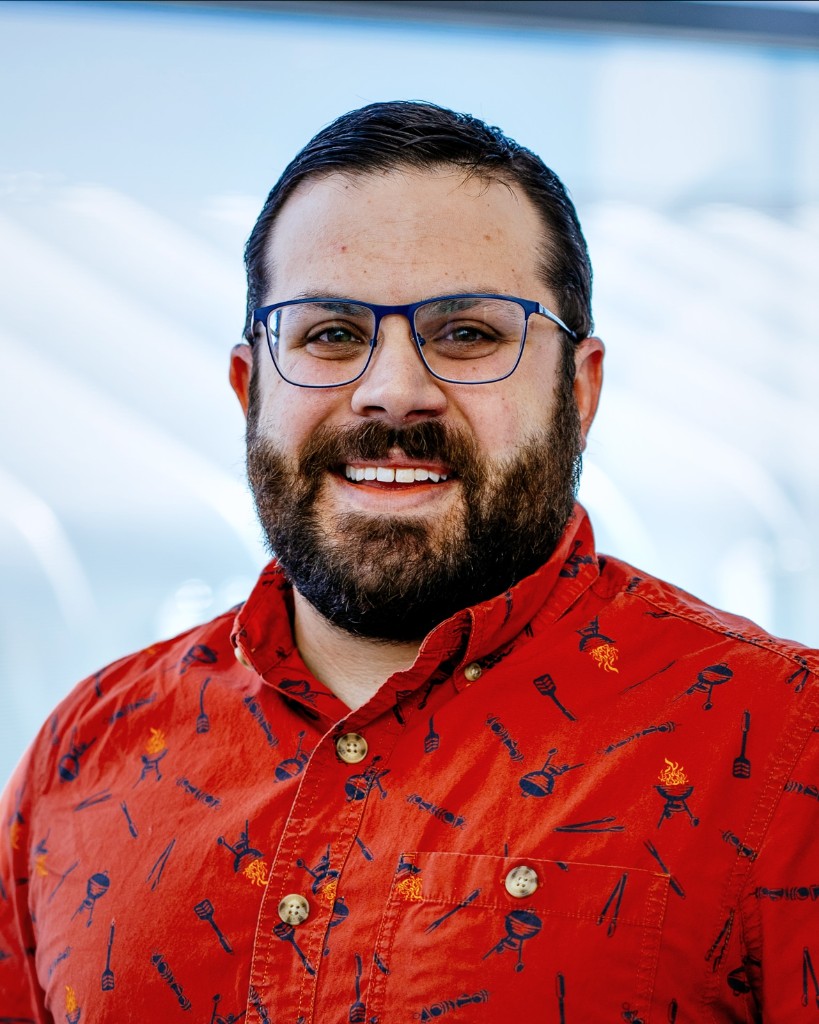
I’m a dad of two who owns more Hawaiian shirts than is strictly defensible. I studied history at Grinnell, which turned out to be good training for this moment, because most of what is happening with AI has happened before wearing a different costume.
I’ve been a teacher in one form or another for my whole career, first with college faculty, then with software customers, and now with whole companies trying to figure out AI.
You should also know where I stand. I find AI enormously useful and I find parts of it deeply concerning, and I think it’s over-hyped and under-hyped at the same time. I’d rather hold all of that honestly than pretend to be a hype man.
Away from work I’m usually reading (I aim for a hundred books a year, and some years I even get there), taking photographs, tending the garden, or setting up a board game.
Some of it is software and some of it is sawdust. I’ve never thought of those as separate hobbies, since they come from the same habit of noticing something that could be better and building a rough version to see what happens.
Away from the screen, the same habit turns into 3D printing, woodworking, photography and whatever is growing in the garden.
I’m my own first customer. About half of the workflows I share with other people started as something I built to fix an annoying part of my own week, so I’ve usually lived with an idea for a while before I recommend it to anyone.
Every morning a message arrives in Slack listing the outside meetings on my calendar, the company behind each one, and whatever that company has been in the news for lately. Gathering that by hand used to eat a good part of my morning.
Nearly everything I do runs on Zapier, and connecting it to my AI workbench means I can ask for a hundred customer email drafts with real variation in them and find them waiting in Gmail for my review. It has become the cheat code for most of my week.
I took over a stalled scaled customer success program and rebuilt it around an autonomous engine that checks our entire enterprise book every day for signs of risk and opportunity. The engine does the watching, which leaves me free to spend my time with customers.
The first rebuild was the content, which won the Most Pragmatic award at our company hackathon. The second was the platform itself, a full migration to a new learning system that opened the Academy to every customer we have.
For Matik’s AI + Post Sales Summit I built a customer success dashboard that scores accounts using data from five different systems and points out likely champions. It won its category, and I made a second version that runs on invented data so I could demo it in public.
The rule I keep coming back to is to let the robots do the robot work, so that people can do the human work.
My path here was anything but straight, and I’ve come to think that is the useful part. Each stop showed me another way people get stuck with technology, along with another way to help them through it.
2010 to 2014
Grinnell College
Studied history with a concentration in technology studies, captained the swim team, and wrote a food column for the student paper.
2014 to 2015
Epic
Tested MyChart across web and mobile, and translated between the engineers and the people who would actually use it.
2015 to 2017
Carleton College
Taught faculty how to use new tools, built a lightboard for about six hundred dollars, and earned a master’s in educational technology leadership along the way.
2017 to 2021
The College of St. Scholastica
Led more than twenty trainings a year, started a virtual reality team, and finished an MBA in leadership and change.
2021 to 2024
Heap
Helped redesign Heap University and built more than thirty automations that gave instructors back about twenty hours a week.
2024 to 2025
Contentsquare
Kept data and processes consistent across systems while two companies merged into one.
2025
Smartcat
Relaunched the academy and moved the knowledge base toward AI agents.
2025 to now
Zapier
The job where every earlier stop turned out to be preparation.
I came to Zapier with one belief, and a year in I hold it more firmly than ever.
AI transformation is a cultural transformation masquerading as a technology transformation.
That is why so much of my work is with people. I run bootcamps (eleven of them in my first four months at Zapier), along with workshops, hackathons and office hours, and I design year-long programs that take an organization from never having touched AI to being fluent in it.
In any room, some people need to get from zero to one and others need to get from one to a million, and a good session has to serve both. I’ve spent my whole career translating between technical and non-technical people, which turns out to be most of what guiding is.
These started as conference talks and essays. I rebuilt each one as something you can scroll through and then try on your own work.
What a four-minute mile in 1954 has to do with the things you still assume AI can’t do for you, and a place to bet on when yours will fall.
Score the tasks on your plate and see which one is worth handing to a robot first.
Write down where last week’s hours actually went, then place each one on a grid to see what to hand over first.
Watch one request turn from a hollow email into a useful one, then start a context file of your own.
That’s what you’re actually paying for with a CSM: how are you going to help me use this tool to achieve the outcomes we actually bought the tool for?
Talk, September 23, 2026
ZapConnect 2026, with Blair Mishleau of Patreon
Talk, May 2026
Gainsight Pulse 2026
Podcast, September 24, 2026
Mastering CS: Candid Leader Insights, episode 91
Podcast, May 12, 2026
The Digital CX Podcast, episode 106
You can also hear me on CELab, The Education Road, Harald’s Curious Corner and Customer Educated, and I’ve spoken at CEdMA’s empowerED conference two years running.
Build competition category winner, Understand Your Customer
Matik AI + Post Sales Summit
Heavy Lifter Award
Zapier
Most Pragmatic, company hackathon
Zapier
Super Scaler Award
Heap Customer Success
Jere Trout Memorial Award for Excellence in Educational Technology Leadership
The George Washington University
The best way to reach me is LinkedIn, where I’m easiest to find. If you already have something specific in mind, these are the requests I say yes to most often.
Conference sessions, panels and podcasts about practical AI in customer education and customer success.
Hands-on sessions where your team leaves with something they built on their own real work.
A thinking partner for leaders who are working out where AI belongs in their education or success program.


